Goi Cuon – Sommerrollen ab 5,50 €
Kalt, nicht frittiert — das ist der ganze Unterschied zur Frühlingsrolle. Das Reispapier wird nur kurz in Wasser getaucht, dann rollt man Reisnudeln, Gurke, Salat und Rucola hinein; man sieht die Füllung durch das Blatt. Gỏi cuốn heißt übersetzt Salatrolle. In Vietnam isst man sie mit den Fingern, zwischendurch oder vor dem Hauptgang. Zum Eintunken Erdnusssoße oder Limetten-Dressing, dazu Tofu, Hühnerfleisch oder Garnelen.Cold, not deep-fried — that is the whole difference to the spring roll. The rice paper is dipped in water only briefly, then rice noodles, cucumber, lettuce and rocket are rolled into it; you can see the filling through the sheet. Gỏi cuốn translates as salad roll. In Vietnam people eat them with their fingers, between meals or before the main course. Dip them in peanut sauce or lime dressing; with tofu, chicken or prawns.
Von diesem Gericht haben wir noch kein eigenes Foto.We do not have our own photo of this dish yet. Gericht ansehenSee the dish
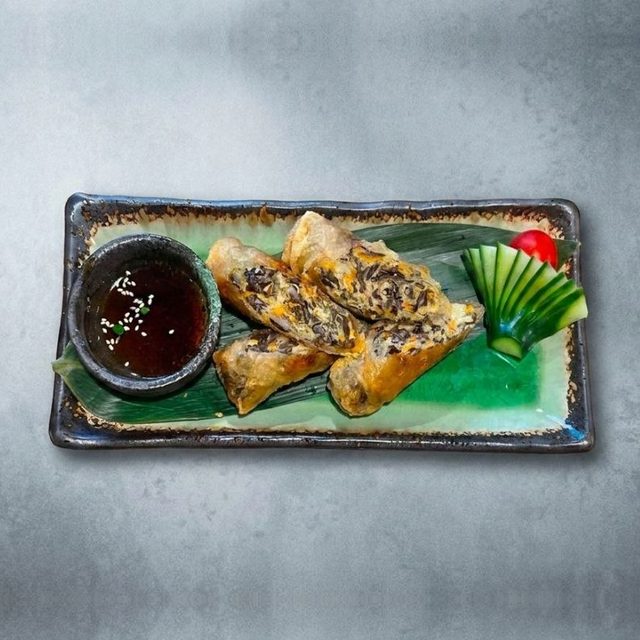
Nem Chien – Frühlingsrollen
Vor Tết, dem vietnamesischen Neujahr, sitzt die halbe Familie am Tisch und rollt: Hackfleisch, Reisnudeln und Gemüse kommen in ein dünnes Blatt, dann ins heiße Fett. Im Norden sagt man nem rán, im Süden chả giò. Frisch aus der Fritteuse ist die Hülle so spröde, dass sie beim ersten Biss splittert — deshalb kommt sie sofort auf den Tisch. Dazu ein Limetten-Dressing. Zwei Stück, heiß.Before Tết, the Vietnamese New Year, half the family sits around the table and rolls: minced meat, rice noodles and vegetables go into a thin sheet, then into hot fat. In the north it is called nem rán, in the south chả giò. Straight out of the fryer the wrapper is so brittle that it shatters at the first bite — which is why it goes to the table immediately. Served with a lime dressing. Two pieces, hot.
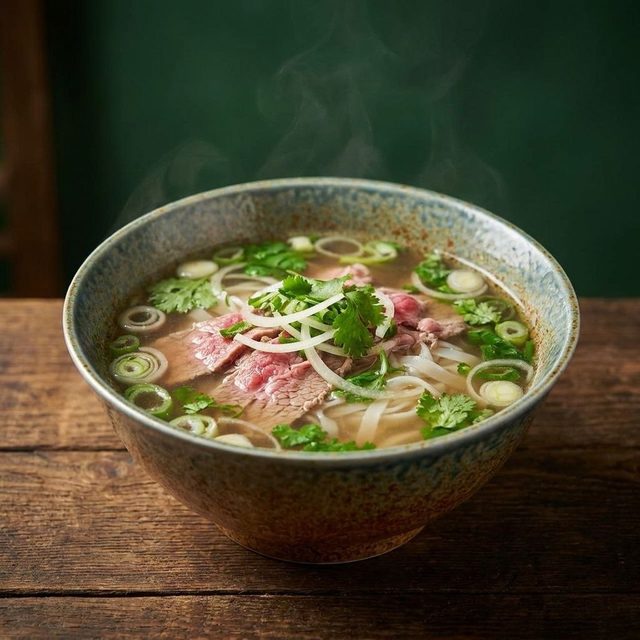
Pho Bo – Rindfleisch
Anfang des 20. Jahrhunderts kam Phở vermutlich aus der Provinz Nam Định nach Hanoi. Dort ist es bis heute vor allem ein Frühstück: Um sechs Uhr morgens stehen die Töpfe schon auf der Straße, und es riecht nach Sternanis, Zimt, Ingwer und gerösteter Zwiebel. Alles hängt an der Brühe. Dazu flache Reisbandnudeln, dünne Rindfleischstreifen, Sojakeimlinge und frische Kräuter. Probieren Sie die Brühe zuerst pur — Kräuter und Sprossen erst danach.Phở probably came from Nam Định province to Hanoi in the early 20th century. There it is still mainly a breakfast: at six in the morning the pots are already out on the street, and the air smells of star anise, cinnamon, ginger and charred onion. Everything depends on the broth. With flat rice noodles, thin strips of beef, bean sprouts and fresh herbs. Try the broth on its own first — herbs and sprouts only afterwards.
Bún Chả Hà Nội 15,90 €
Über Holzkohle brutzeln marinierte Schweinefleisch-Stücke, der Rauch zieht durch die Gassen der Altstadt — so riecht Hanoi um die Mittagszeit. Bún chả ist keine Suppe. Das gegrillte Fleisch liegt in einer lauwarmen, süß-sauren Fischsauce; Reisnudeln, Kräuter und Salat tunken Sie selbst hinein, Bissen für Bissen. 2016 aß Barack Obama genau das mit Anthony Bourdain, auf einem Plastikhocker, für sechs Dollar. Es ist die Spezialität unseres Hauses.Marinated pieces of pork sizzle over charcoal, the smoke drifts through the alleys of the old town — that is what Hanoi smells like around midday. Bún chả is not a soup. The grilled meat sits in a lukewarm, sweet-and-sour fish sauce; you dip the rice noodles, herbs and lettuce into it yourself, bite by bite. In 2016 Barack Obama ate exactly this with Anthony Bourdain, on a plastic stool, for six dollars. It is the speciality of our house.
Von diesem Gericht haben wir noch kein eigenes Foto.We do not have our own photo of this dish yet. Gericht ansehenSee the dish
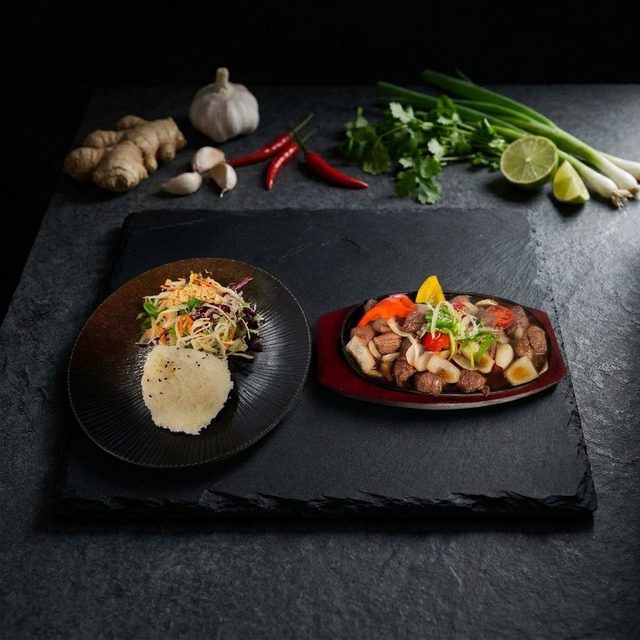
Bò Lúc Lắc – Shaking Beef
„Lúc lắc“ ist ein Geräusch: das Schütteln des Woks. Genau das passiert mit dem Rindfleisch — in Würfel geschnitten, bei großer Hitze angebraten und so lange geschwenkt, bis es rundum Farbe genommen hat. Rindfleisch kam erst mit den Franzosen nach Vietnam und galt lange als Festessen; in den Garküchen Saigons wurde daraus ein Klassiker. Dazu Knoblauch, Ingwer, vietnamesisches Gemüse, Röstzwiebeln und Reisnudeln, serviert auf der heißen Gusseisenplatte.“Lúc lắc” is a sound: the shaking of the wok. That is exactly what happens to the beef — cut into cubes, seared over high heat and tossed until it has taken colour all over. Beef only arrived in Vietnam with the French and was long considered festive food; in the street kitchens of Saigon it became a classic. With garlic, ginger, Vietnamese vegetables, fried onions and rice noodles, served on the hot cast-iron plate.
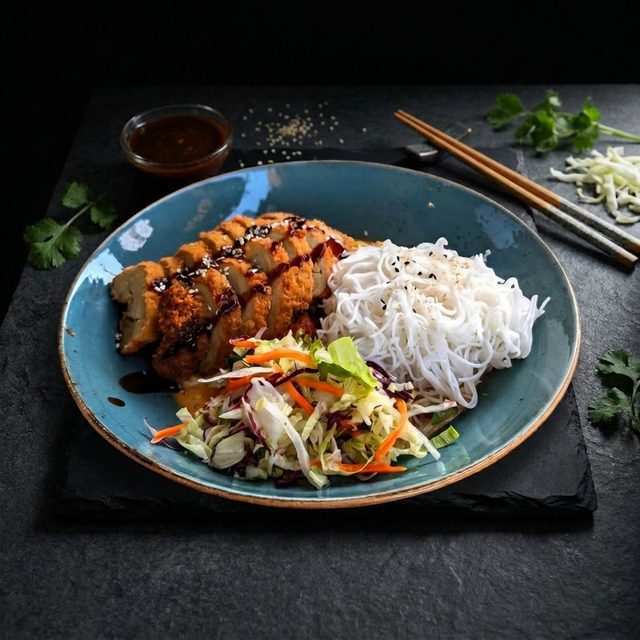
Vit Chay – vegane Ente
In vietnamesischen Pagoden wird seit Jahrhunderten ohne Fleisch gekocht — und trotzdem stehen dort Ente, Huhn und Fisch auf dem Tisch. Die Köche formen sie aus Weizeneiweiß, in Deutschland als Seitan bekannt. An Neumond und Vollmond essen viele Familien fleischlos; dann kommt genau so etwas auf den Tisch. Unsere Vịt Chay wird knusprig gebraten, dazu Gemüse, Salat, Erdnüsse und Reis. Fünf Soßen zur Wahl — am vietnamesischsten ist Sả Ớt: Zitronengras und Chili.Vietnamese pagodas have been cooking without meat for centuries — and duck, chicken and fish are on the table there all the same. The cooks shape them from wheat protein, known in Germany as seitan. At new moon and full moon many families eat meat-free; this is exactly the kind of dish that is served then. Our Vịt Chay is fried until crisp, with vegetables, salad, peanuts and rice. Five sauces to choose from — the most Vietnamese one is Sả Ớt: lemongrass and chilli.
Aus der Sushi-BarFrom the sushi bar
Von diesen beiden Rollen haben wir noch kein eigenes Foto – wir fotografieren nur, was wirklich bei uns auf dem Brett lag.We do not have our own photo of these two rolls yet – we only publish pictures of food that really came off our own board.
Baby Roll 13,50 €
Zum Schluss kommt die Flamme. Die Lachsscheiben, die außen um die Rolle liegen, werden kurz abgeflammt — aburi nennen die Japaner das, vom Verb aburu. Das Fett schmilzt an der Oberfläche, der Rand wird warm und leicht rauchig, der Kern bleibt roh. Innen liegen Lachs, Avocado und Frischkäse. Warm und kalt in einem Stück: Deshalb schmeckt diese Rolle voller als ein gewöhnliches Maki. Acht Stück.The flame comes last. The salmon slices lying around the outside of the roll are briefly seared — the Japanese call this aburi, from the verb aburu. The fat melts on the surface, the edge turns warm and slightly smoky, the core stays raw. Inside there is salmon, avocado and cream cheese. Warm and cold in one piece: that is why this roll tastes fuller than an ordinary maki. Eight pieces.
Nali Roll 14,90 €
Unsere aufwendigste Rolle und die teuerste auf der Karte: innen Lachs, Thunfisch, Garnele, Surimi und Frischkäse, außen Garnelen und Tobiko — der Rogen des Fliegenden Fisches, klein, orange und leicht knackig zwischen den Zähnen. Mehr passt nicht in eine Rolle. Wenn jemand sagt „Suchen Sie mir etwas aus“, empfehlen wir diese. Acht Stück, gut für zwei.Our most elaborate roll and the most expensive one on the menu: salmon, tuna, prawn, surimi and cream cheese inside, prawns and tobiko outside — the roe of the flying fish, small, orange and slightly crunchy between the teeth. Nothing more fits into a roll. When somebody says “pick something for me”, this is what we recommend. Eight pieces, good for two.
Fragen zu Zutaten oder Allergenen?Questions about ingredients or allergens?
Die Allergenkennzeichnung steht bei jedem Gericht auf der Speisekarte. Bei Allergien oder Unverträglichkeiten rufen Sie uns bitte vor der Bestellung an: +49 5151 3609.Allergen labelling is shown with every dish on the menu. If you have allergies or intolerances, please call us before ordering: +49 5151 3609.